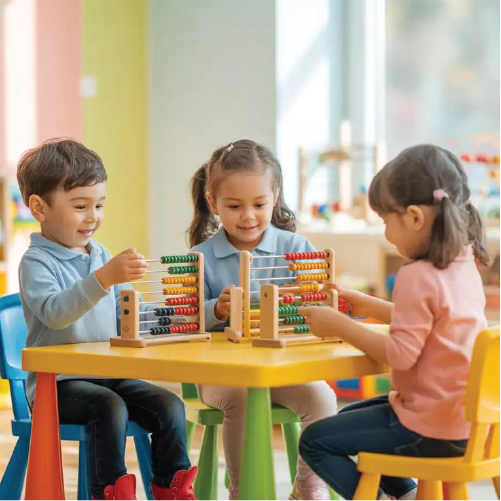
Math is an important skill that children begin learning from an early age. Many parents think math can be difficult for children, but it can actually be fun and engaging when taught through simple activities. When kids learn math through games and everyday experiences, they understand numbers more easily and develop confidence in solving problems.
Parents do not need special tools or expensive materials to teach math at home. Everyday objects such as toys, fruits, pencils, or blocks can be used to introduce counting, numbers, and basic math concepts. When math activities feel like play, children enjoy learning and stay motivated.
Counting Everyday Objects
One of the easiest ways to introduce math to children is by encouraging them to count everyday objects. Parents can ask children to count items such as toys, books, fruits, or even steps while walking.
For example, a parent might ask, “How many apples are on the table?” or “Can you count how many toys you have?” These simple counting exercises help children understand numbers and develop basic math skills naturally.
Counting activities also help children recognize number patterns and improve their memory.
Number Matching Activities
Number matching is another fun and effective way to help children learn numbers. Parents can write numbers on small cards and ask children to match them with the correct number of objects.
For example, if a card shows the number 3, the child should place three small objects next to it. This activity helps children understand the relationship between numbers and quantities.
Parents can also turn this into a game by mixing the number cards and asking children to match them as quickly as possible.
Simple Addition Games
Once children become comfortable with counting, parents can introduce simple addition activities. Addition can be taught using toys, snacks, or blocks.
For example, a parent might say, “You have two cookies, and I give you one more. How many cookies do you have now?” The child can count the objects to find the answer.
This hands-on learning method helps children understand how numbers work together.
Shape and Pattern Activities
Math is not only about numbers; it also includes shapes and patterns. Parents can teach children to recognize shapes such as circles, squares, and triangles by showing them everyday objects.
For example, a plate is a circle, a book is a rectangle, and a slice of pizza can be a triangle. Pattern games such as arranging colored blocks in repeating patterns can also help children develop logical thinking skills.
These activities strengthen problem-solving abilities and improve visual recognition.
Conclusion
Simple math activities at home can help children develop strong number skills while having fun. Counting objects, playing number games, practicing simple addition, and learning shapes all support early math development.
When parents make math interactive and enjoyable, children become more confident and interested in learning numbers. These small daily activities can create a strong foundation for future math learning and help children develop important thinking skills.